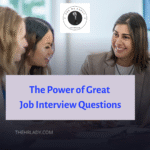
When I sit down with a candidate, I don’t think of interviews as a checklist exercise. Instead, I see them as a structured conversation designed to uncover how someone thinks, how they make decisions, and how they’ll align with both the role and the values of our organization.
My Thought Process in Crafting Interview Questions
I believe every great interview question starts with the job description. Not just the list of duties, but every component:
- Essential Duties – What will this person actually do day to day?
- Knowledge, Skills, and Abilities (KSAs) – What must they bring in terms of technical know-how, problem-solving ability, and interpersonal strength?
- Educational & Professional Foundations – What experiences have shaped their approach to learning and adapting?
- Company Values – The often-overlooked piece: what behaviors do we expect from employees to embody our culture, mission, and vision?
Each of these factors shapes my questions. If a job description emphasizes collaboration, I want to probe how someone has navigated conflict. If we stress innovation, I want to understand their risk tolerance and creativity. And if we prioritize accountability, I’ll ask them to walk me through a time they made a mistake and how they addressed it.
What I’m Really Trying to Draw Out
My goal with a strong question isn’t to test someone on “right answers.” Instead, it’s to see:
- Their thought process – How do they analyze a problem?
- Their self-awareness – Do they know their strengths and weaknesses?
- Their alignment with values – Will they thrive in our culture, not just survive?
- Their adaptability – Can they grow with us as the role and company evolve?
When someone answers, I listen less for the polished story and more for the reasoning underneath it. How they explain decisions often matters more than the decisions themselves.
An Example of a Favorite Question
One question I love to ask is: “When you think about the best job you’ve had—or even the best class, project, or team—what made it so good for you? And what role did you play in making it good?”
Why do I ask this? Because it reveals multiple dimensions at once:
- It tells me what motivates them.
- It shows me how they see their own contribution.
- It uncovers what kind of environment helps them thrive—information I can compare directly to the environment here.
This type of question goes deeper than surface-level skills. It helps me see if the candidate’s natural drivers will mesh with the job duties, KSAs, and company values outlined in the job description.
Why Job Descriptions, Interviews, and Reviews Must Connect
Too often, job descriptions are written once, then filed away. But I believe they should be a living document that carries through the entire employee lifecycle:
- In interviews, they guide the questions.
- In onboarding, they clarify expectations.
- In reviews, they form the backbone of feedback and growth discussions.
When job descriptions, interviews, and reviews are aligned, employees know exactly what success looks like—not just in tasks, but in behaviors and values.
Final Thought:
The best interview questions are those that uncover whether a candidate can do the job, wants to do the job, and will do it in a way that supports the company’s mission and culture.
They should shine a light not only on what a candidate knows but also on who they are becoming.