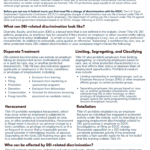
The law hasn’t changed. Under Title VII of the Civil Rights Act of 1964, discrimination has always meant the same thing—if an employment decision is based on race, sex, religion, or another protected characteristic, it may be unlawful. That applies to everyone, equally.
So what’s new? Not the law—> the perspective.
DEI efforts are now being examined more closely under the same legal standards that have always existed. If those efforts exclude, segregate, or rely on protected characteristics in decision-making, that’s a problem. But it’s not a new one—those practices have always been unlawful.
What’s really shifting is the narrative.
If organizations respond by retreating from inclusion and equity out of fear, they won’t be protecting themselves—they’ll be limiting their potential. That shows up as lower engagement, weaker decisions, and less innovation.
- Diversity is reality.
- Equity is how organizations operate effectively.
- Inclusion is where performance gains happen.
Call it DEI, culture, or leadership—but it’s not the problem.
The real risk is confusing compliance with retreat and failing to lead through complexity.
This isn’t a legal shift. It’s a leadership test—and not everyone will pass it.
Get the poster here:
https://www.eeoc.gov/wysk/what-you-should-know-about-dei-related-discrimination-work