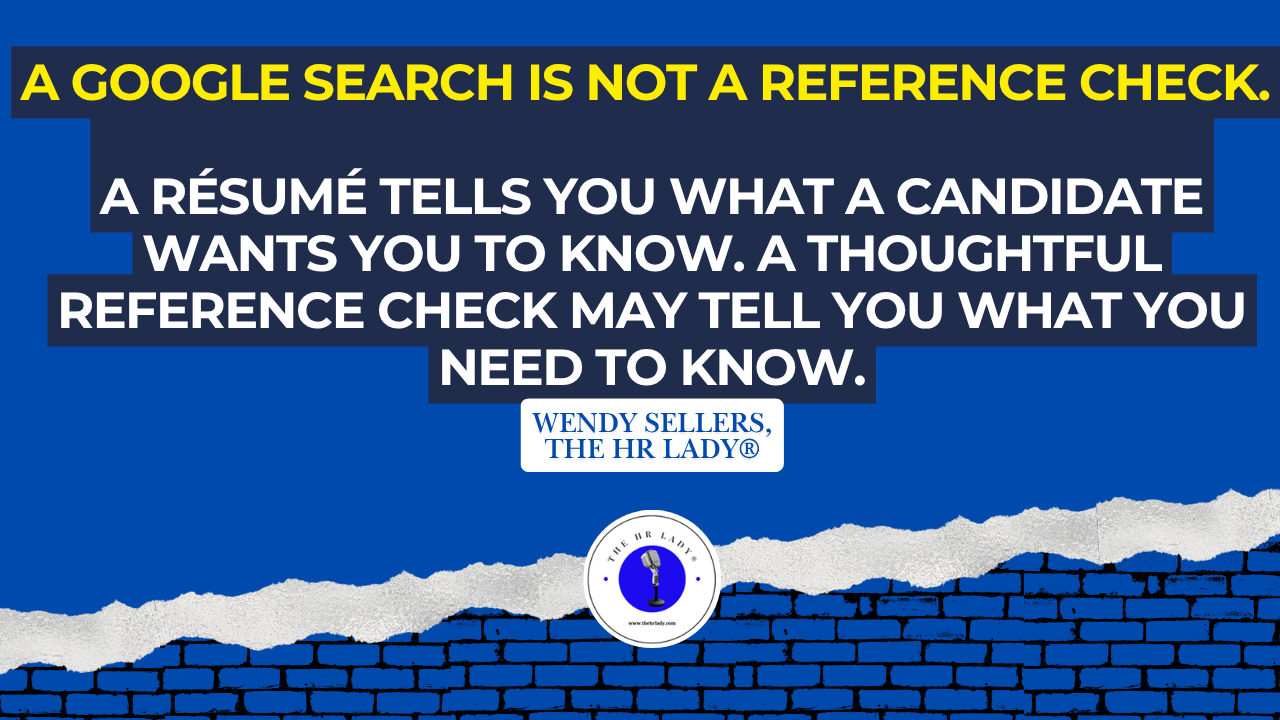
Before finalizing a new hire—often after issuing a conditional offer—take the time to contact professional references. You may be surprised by what you learn when you ask specific questions about the candidate’s reliability, performance, communication style, leadership, eligibility for rehire, and reason for leaving. Online searches can produce incomplete, outdated, or misleading information. They may also expose protected personal information that should have no role in a hiring decision.
Build a consistent, job-related reference-checking process instead:
✅ Obtain the candidate’s written authorization
✅ Ask every reference the same core questions
✅ Focus only on job-related facts
✅ Document the responses
✅ Apply the same process consistently to similarly situated candidates
✅ Verify applicable state and local laws before proceeding
Remember: Reference checks, criminal-history inquiries, and third-party background checks may be governed by different rules. The Fair Credit Reporting Act may apply when an outside company conducts the check, while state and local “ban-the-box,” privacy, notice, and consent laws may impose additional requirements.
Do your due diligence—but do it legally, consistently, and fairly. A résumé tells you what a candidate wants you to know. A thoughtful reference check may tell you what you need to know.
#HumanResources #Hiring #Recruiting #ReferenceChecks #BackgroundChecks #HRCompliance #TalentAcquisition #TheHRLady
Need assistance with recruiting? I can help.